PoEM 2026 is proud to feature distinguished keynote speakers who will share their perspectives and insights on Enterprise Modeling. Stay tuned for additional updates.
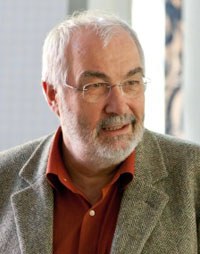
Wolfgang Reisig
An epistemic basis of Enterprise Modeling in the era of AI
Abstract: We briefly inspect some typical (semi-) formal languages for behavioral aspects of enterprise modeling. We discuss the most urgent requirements for enterprise models, in particular for representing behavior. With the help of an example, we sketch an epistemologically based representation of real-world items, data, and behavior. This representation
- is based purely on elementary math and logic, no „syntax“ and „semantics“;
- offers most general concepts for modules and their composition;
- canonically intertwines composition and refinement of modules;
- comes with graphical as well as algebraic representations;
- provides a formal basis for other modeling techniques.
Biography: Wolfgang Reisig is a professor emeritus at the Informatics Institute of Humboldt-Universität zu Berlin, Germany. After his PhD, he joined Carl Adam Petri’s group at the research institute Gesellschaft fuer Mathematik und Datenverarbeitung (GMD) and served as a professor at the Technical University of Munich, before moving to Berlin. He was a guest scientist at the International Computer Science Institute (ICSI) in Berkeley, the Technion in Haifa, the Technical University of Eindhoven, the Royal Melbourne Institute of Technology, and the University of Melbourne. He served as a speaker of a PhD school on Service-Oriented Architectures from 2010 to 2017. He is a member of the European Academy of Sciences, Academia Europaea. Prof. Reisig has published and edited numerous books and articles on Petri Net Theory and Its Applications. In recent years, he has focused on the foundations of modeling, particularly enterprise modeling.
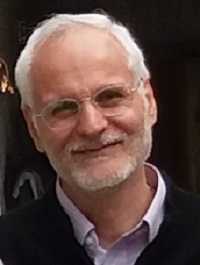
George Vouros
Building Safety-Critical AI Systems
Abstract: This talk will recall major challenges when building Safety-Critical Artificial Intelligence systems. It will present uses cases from the aviation domain and lessons learnt, while it will discuss recent work and challenges on optimising decision making with respect to costs, in conjunction to rewards. It will conclude with major challenges ahead on building safe AI systems.
Biography: George Vouros is a professor in the Department of Digital Systems, University of Piraeus, Greece, and founder and director of the inter-institutional MSc on AI between University of Piraeus and NCSR “Demokritos” (2019–today). He also heads the AI Lab at the Department of Digital Systems (2016–today). His research interests include Knowledge Representation and Reasoning with ontologies, Knowledge Engineering, Multi-Agent Systems, Reinforcement and Imitation Learning, and Human-Centric AI. He has contributed to over 25 EU-funded and national research projects, supervised 13 PhD students, and currently supervises 5 more. He has organized workshops and conferences, served as program chair and steering committee member for leading AI conferences, and has been chair of the Hellenic AI Society (EETN) board four times between 2008 and 2024. He is a long-standing educator in AI, introducing advanced courses at undergraduate and postgraduate levels since 1998.
Peri Loucopoulos

Enterprise Modeling for Social Impact:
A Critique and Lessons from Interventions Against Online Hostile Narratives
Abstract: Enterprise, conceptual and requirements modeling share a common aim, yet their engagement with social problems remains uneven. This keynote reviews their contributions to social impact, drawing on sustainability, human values and digital humanism. It then focuses on online hostile narratives, a problem where detection and moderation are advancing but the means of organised, accountable intervention are not. Drawing on recent research work we will review a modeling framework designed to address the problem of online hostile narratives from a perspective capable of integrating technological, linguistic, ethical, legal, and societal concerns. The talk closes with ten research initiatives and questions for the workshop community: how modeling can help societies counter harmful narratives and be held to account for it.
Biography: Prof Peri Loucopoulos holds the post of Director at the Institute of Digital Innovation and Research (IDIR) in Ireland. He has a B.Sc. in Mathematical Sciences and M.Sc. and PhD degrees in Computer Science. He began his professional career as an analyst and project leader for a large financial institution in the City of London. He held academic appointments in the United Kingdom, in the Department of Computation at the University of Manchester Institute of Science & Technology (UMIST), as Lecturer, Senior Lecturer and Full Professor in Information Systems Engineering. He also served as Full Professor in Information Systems at the Business School of Loughborough University, UK. He was the Editor-in-Chief of the Journal of Requirements Engineering for over 30 years. He is Associate Editor of Information Systems and of the Journal of Database Management, and serves on the editorial boards of 11 other journals. In 2005 he received the UK OR Society’s President’s Medal and in 2008 he was awarded the Edelman Laureate medal. His research focuses on supporting the transformation of large, complex and dynamic enterprise systems through the provision of information systems.