PoEM 2026 is proud to feature distinguished keynote speakers who will share their perspectives and insights on Enterprise Modeling. Stay tuned for additional updates.
Wolfgang Reisig
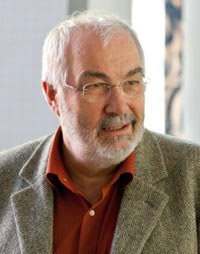
Wolfgang Reisig is a professor emeritus at the Informatics Institute of Humboldt-Universität zu Berlin, Germany. After his PhD, he joined Carl Adam Petri’s group at the research institute Gesellschaft fuer Mathematik und Datenverarbeitung (GMD) and served as a professor at the Technical University of Munich, before moving to Berlin. He was a guest scientist at the International Computer Science Institute (ICSI) in Berkeley, the Technion in Haifa, the Technical University of Eindhoven, the Royal Melbourne Institute of Technology, and the University of Melbourne. He served as a speaker of a PhD school on Service-Oriented Architectures from 2010 to 2017. He is a member of the European Academy of Sciences, Academia Europaea. Prof. Reisig has published and edited numerous books and articles on Petri Net Theory and Its Applications. In recent years, he has focused on the foundations of modeling, particularly enterprise modeling.
George Vouros
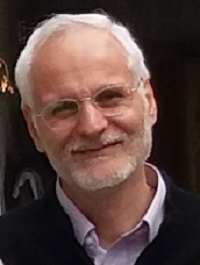
George Vouros is a Professor in the Department of Digital Systems, University of Piraeus, Greece, and founder and director of the inter-institutional MSc on AI between University of Piraeus and NCSR “Demokritos” (2019–today). He also heads the AI Lab at the Department of Digital Systems (2016–today). His research interests include Knowledge Representation and Reasoning with ontologies, Knowledge Engineering, Multi-Agent Systems, Reinforcement and Imitation Learning, and Human-Centric AI. He has contributed to over 25 EU-funded and national research projects, supervised 13 PhD students, and currently supervises 5 more. He has organized workshops and conferences, served as program chair and steering committee member for leading AI conferences, and has been chair of the Hellenic AI Society (EETN) board four times between 2008 and 2024. He is a long-standing educator in AI, introducing advanced courses at undergraduate and postgraduate levels since 1998.